Engineering
Every specification has a reason.
KSS engineering is built on material science, field data, and continuous improvement. Not on catalogue defaults.
Material Science
Boron steel. Why it matters.
Boron steel is the material specification that separates KSS from commodity undercarriage alternatives. Standard mild steel offers adequate strength in benign conditions. Under the sustained abrasive and impact loads of open-cut mining, it reaches its wear limit in a fraction of the time.
Boron is added in precise concentrations — typically 0.0005% to 0.003% — to dramatically improve hardenability. A boron steel component can achieve the same surface hardness as a higher alloy steel at lower cost, with better core toughness retained after heat treatment.
The result: a component that is hard enough to resist abrasive wear on the surface while remaining tough enough to absorb impact loads at the core — without fracture or cracking.
Manufacturing Process
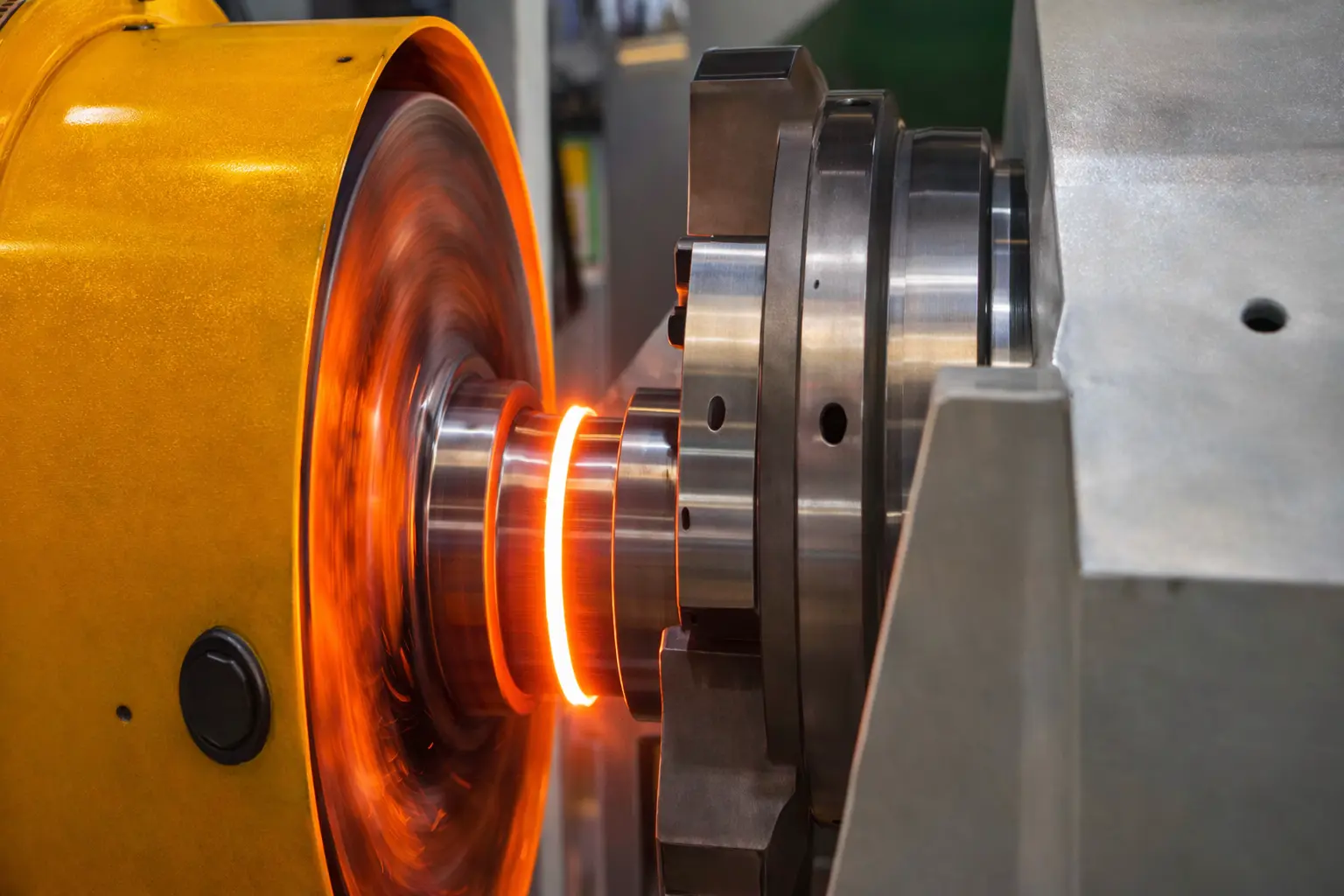
Friction Welding — Roller Body
KSS track rollers are manufactured by friction welding the left and right halves of the forged roller body together. High-speed rotation and axial pressure create a solid-state bond with a smaller heat-affected zone than arc welding — eliminating the porosity and structural weak points that drive early roller failure. The weld joint typically exceeds the strength of the parent material. Because welding occurs before final machining, the process also produces tighter inner dimensions and better concentricity than conventionally welded rollers, directly affecting how evenly the roller distributes load across the track link surface over its service life.
Carburized Bushing System
Bushings are carburized — a heat treatment that introduces carbon into the surface layer, creating a hardened wear surface while retaining a tough, ductile core. Case depth has been consistently increased in the current specification to extend wear life before base material is exposed. Carburizing depth and hardness gradient are controlled against expected wear rate and service life targets.
Heat Treatment
Surface hardness. Core toughness. Both, not one.
Case Hardening Depth
The hardened case depth is specified precisely for each component type. Too shallow and the hard layer wears through early. Too deep and core toughness is compromised. KSS specifies case depth based on expected wear rate at the component's operating position.
Core Toughness
The core of each component is intentionally left at lower hardness to retain ductility and toughness. A hard-throughout component will crack under impact loading — particularly relevant for track links and shoes that absorb ground-impact cycles continuously.
Service Hours Impact
The gap between short-service and long-service undercarriage life comes almost entirely from material specification and heat treatment precision. KSS's long-service field performance is a direct consequence of controlled treatment protocols.
Quality Control
Measurement, not assumption.
Every KSS component passes dimensional tolerancing checks, hardness testing, and seal integrity testing before leaving the production line. These are not sampling protocols — they are 100% component-level verification for critical dimensions.
Dimensional tolerancing verifies that bore diameters, pitch dimensions, and flange geometries are within specification. Hardness testing confirms case depth and surface hardness at defined test points. Seal integrity testing validates that the pre-filled bearing system will not leak through the service life.
Kaizen in Production
Improvement is continuous.
Kaizen — continuous improvement — is not a marketing word at KSS. It is the feedback loop connecting field performance data to production specifications. When field reports indicate unexpected wear patterns, that data is reviewed against the production specification for the relevant batch.
If the data supports a specification change, the change is implemented in the next production cycle. This loop is what drives the gradual improvement in service hours over time — and what created the foundation for the upcoming new specification tier.
現場 — Genba
Field Connection.
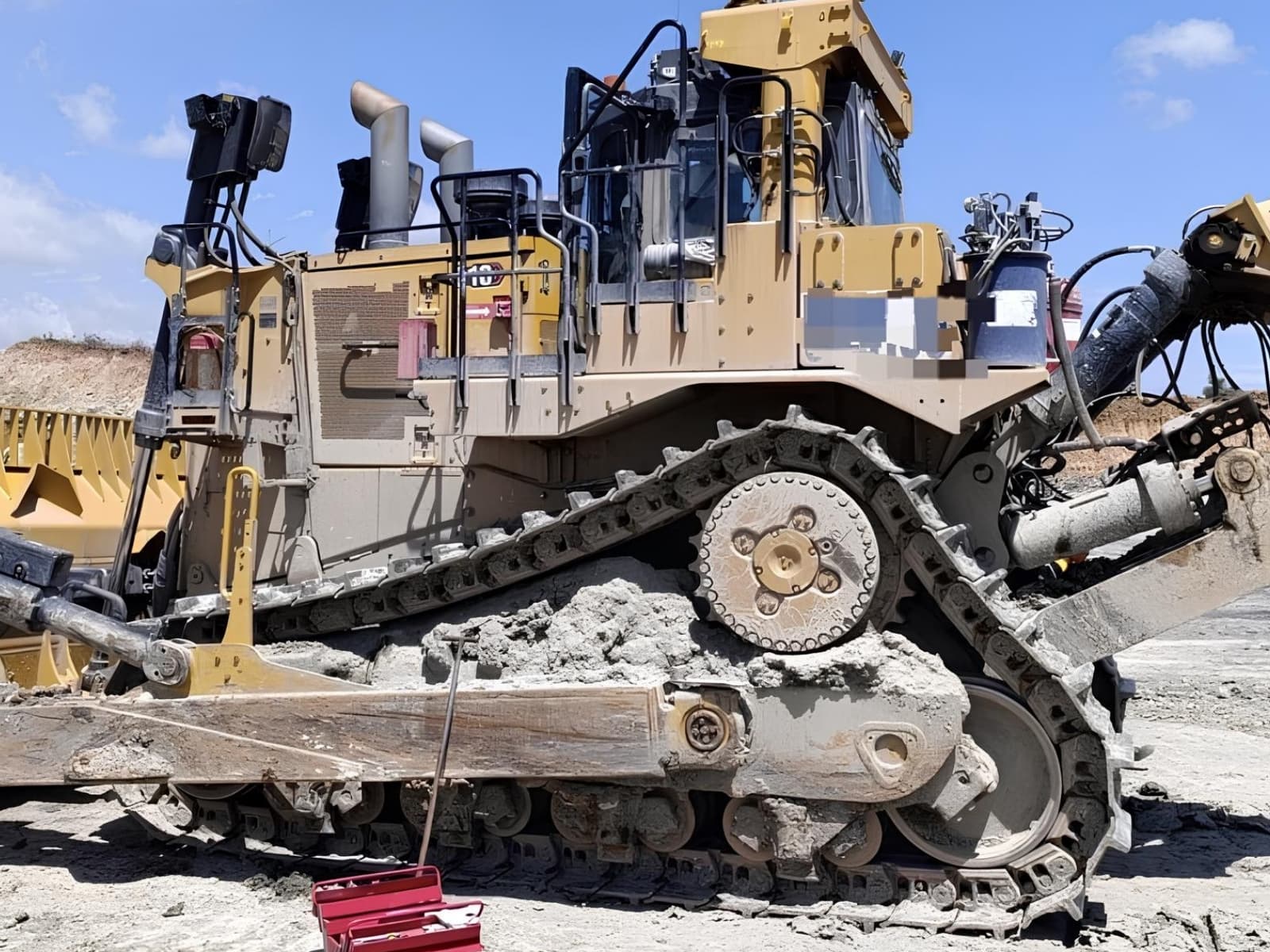
Genba means "the actual place" — the operating site, the mine face, the ground the machine works in. Engineering decisions are grounded where the components run. Every specification is backed by documented field performance.
Engineering questions?
Speak with our authorized service provider for technical specifications and application guidance.