Track Shoes
Ground contact shoes engineered for traction, flotation, and wear resistance across terrain types. Three variants, two material options.
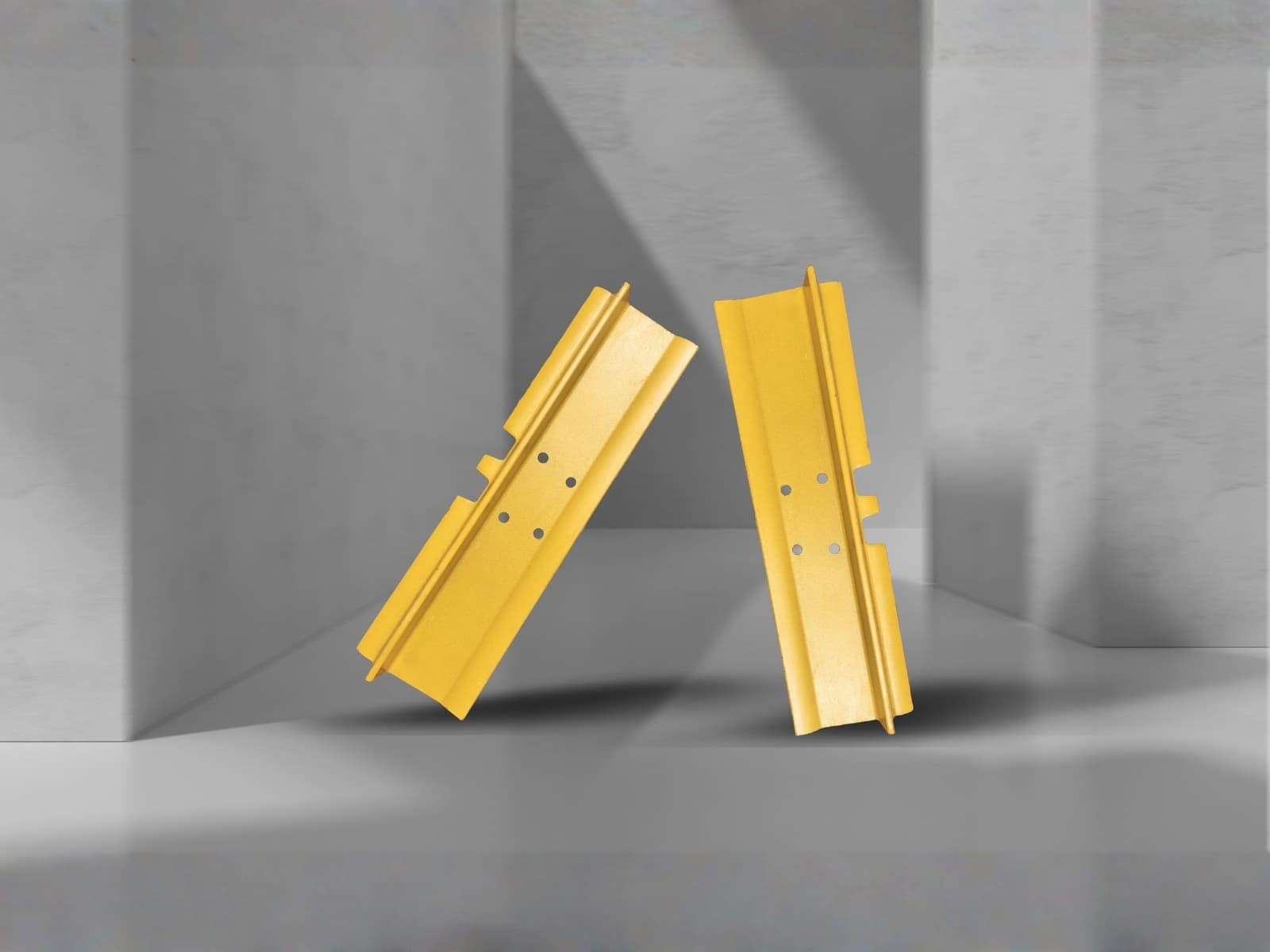
Variants
Matched to your ground conditions.
Single Grouser
Boron steel
Hard ground, rock, consolidated soil
High single grouser provides maximum penetration traction in hard-packed and rocky terrain. Preferred for mountain and hard-rock mining operations.
Triple Grouser
Boron steel or manganese steel
Mixed terrain, loose soil, coal
Three grouser profile distributes ground pressure across a wider contact area. Preferred for coal mining and mixed-terrain open-cut operations. Lower ground pressure reduces shoe sinkage.
Flat Shoe
Manganese steel
Soft ground, peatland, swamp
Wide flat profile for maximum flotation on soft or swampy ground. Minimal ground disturbance. Common in forestry and peatland operations in Kalimantan and Sumatra.
Material Selection Guide
Boron Steel
High hardness, high wear resistance
Best for: Abrasive hard ground applications — rocky terrain, consolidated soil
Higher initial hardness. Preferred where abrasive wear is the primary failure mode.
Manganese Steel
Work-hardening, impact resistance
Best for: Impact-heavy and mixed applications — coal, soft-to-medium terrain
Surface hardens under repeated impact. Preferred where impact loading dominates over abrasive wear.
Field Context
Wrong shoe selection costs more than the shoe itself.
Track shoe selection affects more than traction. An oversized shoe on hard ground creates excessive side loading on track links and rollers. An undersized shoe on soft ground causes sinkage and drive slippage, increasing final drive load and fuel consumption.
Material selection compounds this. Boron steel on high-impact soft ground can crack rather than wear — brittle fracture failure that takes the entire shoe out of service rather than wearing it gradually. Manganese steel in pure abrasive conditions wears faster than its hardened equivalent because the work-hardening mechanism requires repeated impact to activate.
KSS provides terrain-matched recommendations based on site conditions, equipment model, and operating cycle. The goal is matching shoe geometry and material to the actual failure mode of your ground — not defaulting to the nearest standard size.
Get a terrain-matched recommendation.
Share your site conditions and equipment model for a specific shoe and material recommendation.